Ahner Industrial resource
Large Welded Frames for an Industrial Heater House
An industrial heater-house project brought together large structural frames, laser-cut and formed sheet metal, welded assemblies, and component kits.
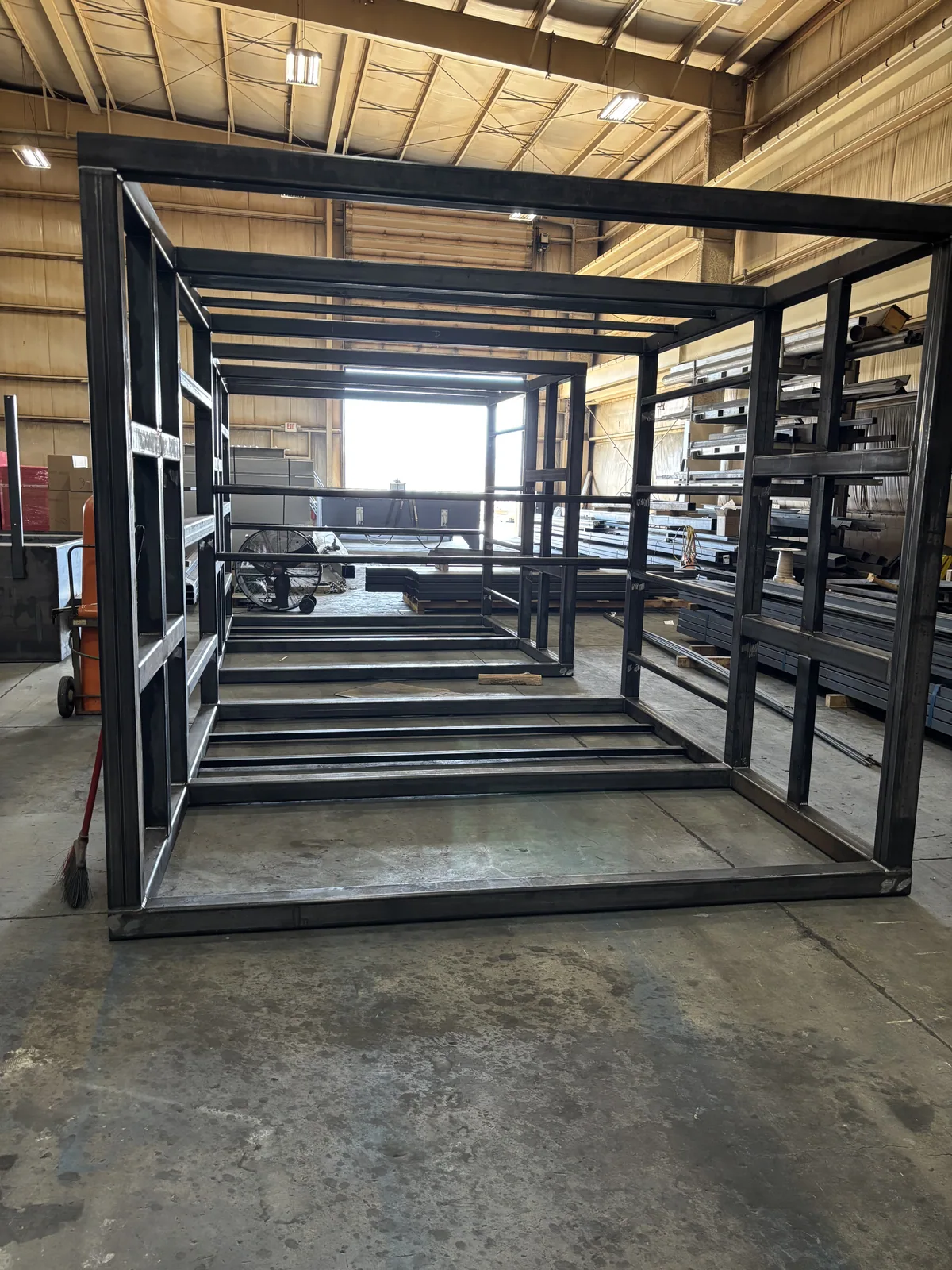
An industrial heater-house project brought together large structural frames, laser-cut and formed sheet metal, welded assemblies, and component kits. Ahner fabricated the work in Sandusky and shipped project loads in 2026.
Actual heater-house frame fabrication at Ahner. This project shipped in 2026; the photograph shows the structural frames during shop fabrication.
The Documented Scope
Material: Steel tube & angle frames with sheet-metal components
Processes: Laser cutting, Sheet metal forming, Welding & assembly, Component kitting
Project shipments in 2026
The work combined large frame fabrication and component-kit preparation with staged project shipments in 2026.
A heater house built from several connected scopes
This project involved the heater-house portion of an industrial oven package. The work combined large structural frames with sheet-metal components, welding and assembly, insulated-panel kits, and associated duct and nozzle fabrication. Each scope had its own pieces, but they belonged to the same larger equipment project. Ahner’s role extended beyond making a set of frames: the shop also had to prepare related components for the next assembly stage and coordinate what would travel together.
The structural work behind the photograph
The shop photograph shows the actual frame fabrication for this project. Steel tube and angle form the structural frames. Upright members, side rails, and repeated crossmembers make the scale and construction visible in the photograph. These members establish the framework around which the heater-house assembly is built. For a fabrication of this type, the relationships between the frame, attached panels, and adjoining components matter as much as the overall size. The photograph captures the structural stage, before those surrounding scopes are represented in a finished equipment assembly.
Laser-cut and formed sheet metal belonged to the same build
The project also included laser-cut trim and cut-and-bent sheet-metal components. Those parts connect the structural fabrication to the enclosure and assembly details. Project correspondence discussed the structural steel and sheet metal together, rather than treating the frame as a standalone order. That distinction matters when quoting a similar package: a frame drawing may describe the main structure while separate details define the trim, panels, attachment pieces, and formed profiles that must be supplied with it.
Welding and assembly at the heater-house level
A shop visit recap identified heater-house welding and assembly as part of Ahner’s work. The project therefore involved both individual component fabrication and work at the assembly level. Large frames bring several practical considerations into the manufacturing review: access to the joints, the order in which adjoining pieces can be fitted, and the space needed to handle the fabrication through the shop. On a similar project, weld requirements and the dimensions that control mating parts should be identified on the drawings before the route is finalized.
Fabricated modules and kits for the next assembly stage
The delivery plan included a mixture of assembled work and component kits. Shipping correspondence identified structural kits grouped on pallets and insulated-panel kits, while other discussions covered the remaining structural-steel and sheet-metal pieces. Some parts were intended to continue through assembly outside Ahner. This made the contents of a load important: the receiving team needed to know which fabricated pieces and kits were arriving, and which portion of the larger assembly they supported. A module and a kit of loose components require different preparation and receiving plans.
Associated duct and nozzle fabrication
Duct and nozzle work formed another part of the project conversation. The shop visit recap addressed that fabrication and its separate shipment from the heater-house work. This is a useful example of why an industrial equipment package needs scope boundaries that are clear at the component level. Structural fabrication, sheet-metal details, panels, and duct connections can be related without all following the same shop route or leaving on the same truck. Drawings and load planning need to describe those relationships clearly.
Staged shipments in 2026
The project shipped in 2026. An April shipping exchange included a packing list for a load sent that day and referenced photographs taken before the truck’s tarp was rolled over the load. The same project correspondence described palletized structural and panel kits, with subsequent coordination for additional components. These were staged project deliveries. For large fabrications, freight planning needs to account for the assembled size, loose pieces, protection during transport, and the receiving team’s ability to unload and sort what arrives.
What this project shows about Ahner’s work
The project brings several Ahner capabilities into one practical example: structural fabrication, laser-cut and formed sheet metal, welding and assembly, and preparation of component kits for the next assembly stage. The frames in the photograph are part of that actual industrial build, which shipped during 2026. For a buyer with a comparable equipment package, the useful starting point is the complete fabrication scope: what should leave the shop assembled, what should be supplied as a kit, and how related components need to be grouped for the next stage.
Planning a Similar Project
Identify the assembly boundaries before pricing the work. Include the structural frame, sheet-metal details, panel and attachment interfaces, associated ductwork, and the split between shop assembly and receiving-site assembly. Then define the shipment groups and handling requirements so the fabrication quote covers the work that actually needs to reach the next stage.
What to Send
Send assembly drawings and component details, material specifications, critical mating dimensions, weld requirements, panel and insulation scope, finish requirements, quantities, and the target delivery sequence. Tell us which pieces should arrive assembled, which should be kitted, and what unloading arrangements are available.