Ahner Industrial resource
Industrial Ductwork: From Fabrication Details to Flatbed Delivery
A carbon-steel ductwork package combined duct sections, transitions, flanges, end caps, and inlet components.
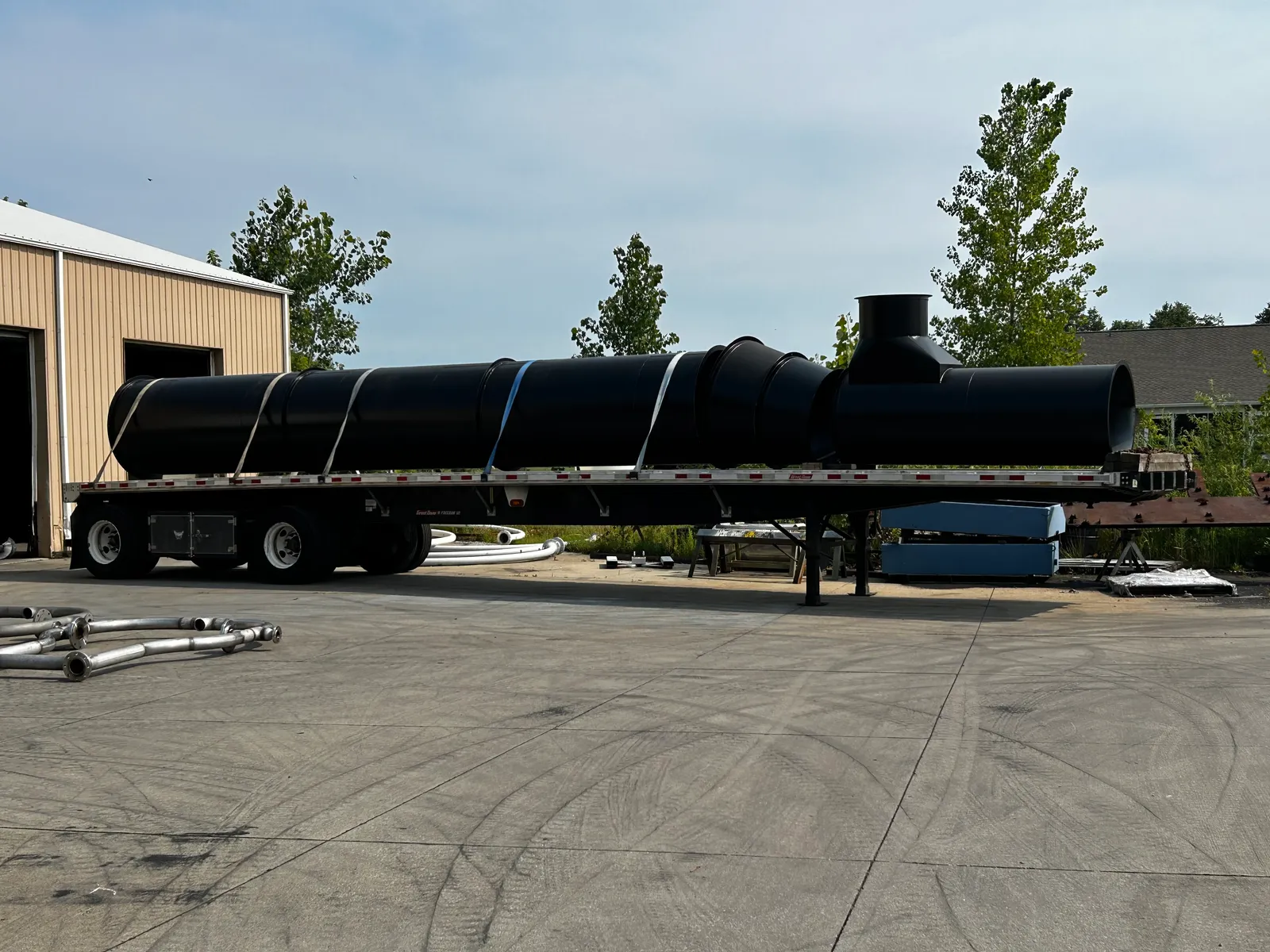
A carbon-steel ductwork package combined duct sections, transitions, flanges, end caps, and inlet components. Ahner’s shop route connected cutting, forming, fitting, welding, and finishing, with photographed truckloads shipped in July 2026.
Actual ductwork shipment at Ahner in July 2026. The photographed loads were accompanied by packing lists identifying the shipped sections and components.
The Documented Scope
Material: Carbon-steel ductwork, flanges & inlet components
Processes: Laser cutting, Forming & machining, Fit-up & welding, Finishing & shipment
Two truckloads in July 2026
Coated duct sections and accompanying components were loaded for transport with packing lists for the July 14 and July 15, 2026 shipments.
A fabrication package with more than straight duct
The project called for industrial ductwork and associated fabricated components. The drawing package covered duct details, flange details, and an inlet box, while the shop material breakdown included transitions, fan-inlet components, and end caps. Together, those pieces describe a connected ductwork package with changes in geometry and several assembly interfaces. The large flanged sections in the shipment photographs show the scale of the work. Producing a package like this means coordinating the individual details as well as the overall layout.
Detailed drawings defined the fabrication scope
The project information distinguished the system layout from the detailed fabrication drawings. That distinction is important: a layout establishes where ductwork runs, while the detail drawings define the pieces the shop must make. The specification addressed roundness, alignment, mating flanges, and identification of the fabricated sections. Those were requirements for the work, not interchangeable features. For a similar RFQ, include both the arrangement and the fabrication details so connections, changes in section, and individual component requirements can be reviewed together.
Material requirements followed the component details
The project’s material list included 10-gauge hot-rolled steel sheet in several sheet sizes, along with flange and inlet-component requirements. A separate 10-gauge stainless-steel item also appeared in the job materials. This was primarily a carbon-steel ductwork package with component-specific material details. A useful quote should preserve that distinction: identify the material and thickness for each section or component, particularly where a different alloy, thicker connection piece, or separate inlet detail changes the fabrication work.
A shop route connecting cutting, forming, and assembly
The project traveler listed laser cutting, press-brake work, sawing, machining, weld fitting, and finishing. That route shows how the package drew on several shop operations. Sheet profiles and connection pieces belonged to a larger fabrication route that included fit-up, welding, and finishing requirements. For work of this kind, reviewing the route as a package helps reveal interfaces between operations: a cut flange must relate to the adjoining duct, formed details must fit their assemblies, and pieces need to remain identifiable as they move toward shipment.
Flanges and fit-up shaped the requirements
The large circular sections in the photographs have flanged ends, making the connection details visible. The project specification addressed mating-flange hole alignment and the geometry of segmented elbows, transitions, and round duct. These details influence how separate fabrications join together in the field. On a comparable project, the quote package should identify the controlling connection dimensions, bolt pattern, mating-part references, and any approval needed for changes. The shop needs those details early, alongside the material and welding scope.
Finishing was part of the delivery package
The shop route included finishing, and the shipment photographs show coated duct sections. The project documents also addressed surface preparation, paint, and piece identification. The finishing scope therefore belonged in the fabrication package rather than being left as an undefined next step. For a similar build, specify the preparation and coating system, which surfaces require treatment, and how identification will remain readable after coating. Handling and load preparation should also account for the finished surfaces and the connection areas that need protection.
Two July truckloads, with identified contents
The shipping exchange supplied photographs of trucks loaded on July 14 and July 15, 2026, together with their packing lists. The July 14 list covered six identified duct sections and a pallet of end caps. The July 15 list covered four duct sections. These are the two deliveries featured here; the end-cap pallet is a separate packing-list item rather than another duct section. The lists connect each load to its contents, giving the receiving team a clearer way to account for the fabricated pieces.
Large fabrication continues into loading and receiving
The photographs show coated sections secured on flatbeds outside Ahner’s Sandusky shop. The project’s delivery requirements also addressed shipment notice and limited storage at the receiving end. For ductwork of this scale, fabrication and delivery planning meet at the load: the pieces have substantial physical size, flanges need consideration during handling, and the receiving crew needs to identify what has arrived. This example follows the shop-to-truck handoff for those July shipments; field installation is a separate stage of the overall project.
What a buyer can take from this example
This work combines the details that often make an industrial duct package demanding: several component types, material requirements by detail, flanged connections, multiple shop operations, a finishing scope, and delivery groups with packing lists. The result shown here is concrete: fabricated, coated ductwork loaded for transport in July 2026. When you bring Ahner a similar package, the drawings, component identification, finish requirements, and delivery sequence help the shop review the fabrication and freight scope as one coordinated piece of work.
Planning a Similar Project
Include the system layout and fabrication details, then define the material by component, mating flanges, welding requirements, coating, piece identification, and shipment groups. Add receiving access, unloading arrangements, and the boundary between fabrication and field installation. Those details help turn a collection of duct drawings into a usable manufacturing and delivery scope.
What to Send
Send the layout and detailed drawings, material and thickness by component, flange and bolt-pattern details, weld requirements, coating specification, section identifiers, quantities, and target shipment dates. Include shipping splits, receiving constraints, and any field-assembly or installation work you want included in the review.