Fabrication article
What is Structural Rolling in Metal Fabrication?
Learn how structural rolling forms beams, channels, angles, pipe, and tube into controlled curves for frames, supports, tanks, and industrial assemblies.
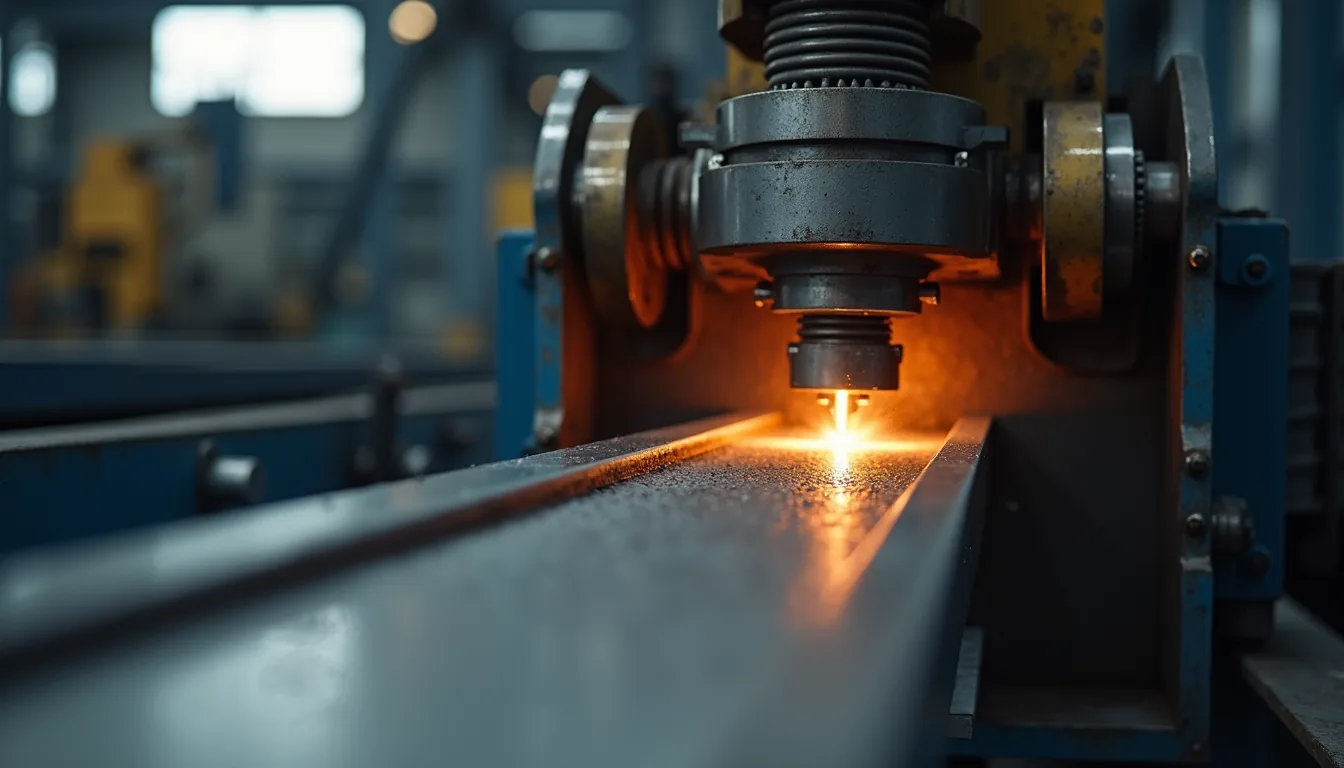
Structural rolling curves beams, channels, angles, bars, pipe, or tube by passing the section through rolls in a controlled orientation. Feasibility depends on the cross-section, material and condition, member size, rolling axis, target radius or template, arc length, straight-end allowance, quantity, tolerances, springback, twist, ovality, flange or web distortion, surface requirements, and downstream fit.
This guide distinguishes structural-section rolling from plate rolling and lists the information a fabricator needs to review a curved-member RFQ.
Understanding Structural Rolling: The Basics
Structural-section rolling uses a suitable roll set to apply bending progressively along a member. The process changes geometry and can also change local cross-section, residual stress, surface condition, and end geometry; allowable distortion and any engineering restrictions should be stated on the released drawing.
Section rolls, tooling, and handling limits vary by profile, size, material, orientation, and radius. Plate rolling is a related but distinct process used to form plate into cylinders, cones, shells, or other curved plate shapes.
Curved members appear in frames, guards, supports, stairs, tanks, ducts, architectural work, and equipment. The drawing should define the finished geometry, measurement method, datums, allowed twist or cross-section distortion, tangent or straight lengths, trim condition, and any qualification or inspection requirements.
Key Features of Structural Rolling
Progressive forming: passes and roll settings are developed for the section and target geometry; the method does not by itself eliminate cracking, buckling, twist, ovality, or other distortion.
Geometry range: achievable radius depends on section, size, material, axis, tooling, machine, straight ends, and permitted distortion.
Measurement and tolerance: define how radius, chord, rise, arc, tangent points, twist, and cross-section distortion will be measured and accepted.
Material review: grade, condition, dimensions, toughness, formability, weld history, temperature, certification, and surface requirements affect feasibility.
How Structural Rolling Works in Metal Fabrication
A fabricator first reviews the released member designation or section dimensions, material specification, rolling orientation, target geometry, tolerances, end condition, quantity, and handling constraints. A trial setup, extra stock, templates, intermediate measurement, heat or stress considerations, and post-roll trimming may be required depending on the job.
There are different types of rolling machines depending on the shape and size of the metal:
Three-roll machines: common configurations exist for structural sections and plate, but capacity depends on the specific machine, tooling, workpiece, orientation, and target geometry.
Four-roll plate machines: commonly used for plate shells and cylinders with controlled pre-bending; they are not a universal choice for structural sections or tighter curves.
Plate rolls: form flat plate into cylinders, cones, shells, and related shapes. Plate width, thickness, yield strength, diameter, pre-bend, seams, and handling determine capacity.
Roll settings and the number of passes are developed for the actual section, material, orientation, radius, and machine. Springback and cross-section change are measured against the agreed method; the final acceptance standard should come from the released project requirements.
Practical Example
For a curved steel member, rolling a continuous length may reduce intermediate joints, but it does not automatically improve structural performance or installation. The responsible engineer must approve member selection, rolling effects, connections, loads, tolerances, and any permitted splices.
Benefits of Structural Rolling for Custom and High-Volume Parts
Structural rolling offers several advantages that make it ideal for businesses needing custom and high-volume metal parts:
1. Precision and Consistency
Once a setup and measurement method are qualified, repeat lots may reuse tooling, templates, and process knowledge. Material variation, springback, wear, end effects, handling, and inspection still influence repeatability.
2. Cost-Effectiveness
Rolling a continuous member can avoid some cut-and-weld operations, but it may add setup, trial stock, tooling, handling, trimming, inspection, freight, or subcontract work. Compare complete manufacturing routes for the actual geometry and quantity.
3. Enhanced Structural Integrity
Rolling avoids a joint at locations that would otherwise be spliced, but the forming operation can introduce residual stress and section distortion. Structural adequacy, material limits, heat treatment, connection design, and acceptance criteria remain engineering decisions.
4. Flexibility in Design
Available radius and arc length depend on the section, size, material, axis, machine, tooling, straight-end allowance, distortion limits, and handling. Send the complete geometry for feasibility review rather than assuming a gentle or tight curve is automatically rollable.
Common Applications of Structural Rolling
Structural rolling is widely used across industries that require custom-shaped metal components. Here are some typical applications:
Construction: Curved beams for bridges, stadiums, and architectural features.
Automotive: Roll cages, chassis components, and exhaust systems.
Shipbuilding: Hull frames and curved structural supports.
Heavy Equipment: Frames and supports for cranes, bulldozers, and other machinery.
Energy Sector: Curved pipes and supports for oil rigs and wind turbines.
Each application demands precision and durability, which structural rolling reliably delivers.
Choosing the Right Partner for Structural Rolling Services
When selecting a metal fabrication partner for structural rolling, consider these factors:
Experience and expertise: Look for companies with proven track records in rolling complex shapes.
Equipment and tooling: verify the machine, roll set, orientation, capacity, straight-end allowance, handling, and measurement method for the actual part.
Inspection and records: define dimensions, distortion limits, measurement method, sampling, material records, and any required qualifications or documentation.
Capacity and schedule: confirm material, setup, tooling, trial allowance, quantity, downstream work, inspection, freight, and quoted lead-time basis.
Customer service: Responsive communication and flexibility are essential for custom projects.
For a structural-rolling inquiry, Ahner reviews the actual section, material, orientation, radius or template, arc length, ends, quantity, tolerance, inspection, downstream fabrication, shipping, and schedule. The accepted quote identifies whether rolling is performed in-house or coordinated and what acceptance method applies.
Maximizing Efficiency with Structural Rolling
To get the most out of structural rolling, consider these actionable tips:
Plan your design early: Provide detailed specifications and drawings to your fabricator.
Choose the right material: Some metals roll better than others; consult with experts.
Optimize batch sizes: Rolling in larger batches can reduce costs and lead times.
Inspect parts regularly: Use quality checks to catch any deviations early.
Collaborate closely: Maintain open communication with your fabrication partner to address any challenges promptly.
These inputs reduce quote assumptions and give the fabricator a defined basis for feasibility, process planning, inspection, and delivery.
Looking Ahead: The Future of Structural Rolling
Computer control and measurement tools can assist setup and documentation, but machine capability and part acceptance remain section- and project-specific. Current equipment, tooling, and inspection fit should be confirmed with the selected supplier.
Choose a supplier by comparing capability for the actual section and radius, responsibility boundaries, inspection method, relevant experience, capacity, logistics, and the documented quote—not by a generic technology claim.
Structural rolling is one manufacturing route for curved members. A fabrication-ready package connects the finished geometry and engineering requirements to a feasible section, rolling orientation, process, inspection method, downstream work, and delivery plan.
If you want to learn more about how structural rolling can enhance your metal fabrication needs, visit Ahner Industrial to explore our services and capabilities.