Fabrication article
Integrated Fabrication: Combining Laser Cutting and Press Brake Forming for Seamless Production
Learn how integrated laser cutting and press-brake forming can improve fit, repeatability, lead time, and production flow for sheet metal parts.
Feb 13, 2025
Updated: Feb 17, 2025
Keeping laser cutting and press-brake forming within one reviewed manufacturing route can reduce handoffs and make revision, material, orientation, datum, and inspection decisions easier to coordinate. The benefit depends on the part: drawing quality, tolerance strategy, bend geometry, tooling, material behavior, quantity, and downstream assembly still determine the practical route.
A Unified Approach to Fabrication
An integrated route connects the released model or drawing to material preparation, cutting, forming, inspection, and any downstream welding or assembly. The following checkpoints help engineering and purchasing teams prepare a fabrication-ready package.
1. From Design to Material Preparation
Start with the current drawing and, when available, a clean CAD model. Identify material and thickness, finished-part datums, critical dimensions, bend radii, grain-direction constraints, finish, quantity, and inspection requirements. Ahner can then review cutting geometry, bend access, tooling, flat-pattern assumptions, and the sequence of operations.
2. Laser Cutting: Capacity and Part Review
Ahner operates Trumpf 3040 fiber and Mitsubishi CO₂ laser systems. Published size and thickness ranges are useful screening references, but machine selection and quote approval depend on grade, geometry, tolerance, edge condition, stock availability, quantity, and downstream forming.
Trumpf 3040 fiber laser: published capability references include steel sheet and plate up to 1 inch, stainless up to 1.5 inches, and aluminum up to 1 inch, with a maximum referenced sheet size of 78 by 157 inches. Copper, brass, and other materials require project review.
Speed & Precision: Achieve micro-burr-free edges with rapid cutting speeds.
Versatility:Steel sheet metal and plate up to 1" thick in sizes up to 78" x 157".Stainless steel sheet metal and plate up to 1.5" thick (78" x 157").Aluminum sheet metal and plate up to 1" thick (78" x 157").Capable of cutting copper, brass, and other exotic materials.
Versatility:
Steel sheet metal and plate up to 1" thick in sizes up to 78" x 157".
Stainless steel sheet metal and plate up to 1.5" thick (78" x 157").
Aluminum sheet metal and plate up to 1" thick (78" x 157").
Capable of cutting copper, brass, and other exotic materials.
Mitsubishi CO₂ laser: published capability references include steel up to 1 inch, stainless up to 3/4 inch, and aluminum up to 1/2 inch, with a maximum referenced sheet size of 60 by 120 inches. Plastics, acrylic, Inconel, and other materials require project review.
Fast Turnaround: Provides a swift, cost-effective alternative to waterjet cutting.
Precision & Flexibility:Steel sheet metal and plate up to 1" thick (60" x 120").Stainless steel sheet metal and plate up to 3/4" thick (60" x 120").Aluminum sheet metal and plate up to 1/2" thick (60" x 120").Also proficient in cutting acrylic, plastics, and materials such as Inconel.
Precision & Flexibility:
Steel sheet metal and plate up to 1" thick (60" x 120").
Stainless steel sheet metal and plate up to 3/4" thick (60" x 120").
Aluminum sheet metal and plate up to 1/2" thick (60" x 120").
Also proficient in cutting acrylic, plastics, and materials such as Inconel.
A cut blank is only the starting condition for a formed part. Hole-to-edge and hole-to-bend spacing, reliefs, tabs, slots, contour tolerance, burr direction, and datum strategy should be reviewed in the finished-part context.
3. Advanced Press Brake Forming: Shaping with Precision
After cutting, the forming plan must account for tooling access, bend sequence, inside radius, flange length, material variation, grain direction, springback, part handling, and which dimensions are controlled after forming. Available press brakes include:
Trumpf TruBend 5170(S): published 187-ton capacity and forming length up to 157 inches. Actual part capacity depends on material, bend length, tooling, opening, geometry, and required tonnage.
High Capacity: With a 187-ton capacity, it can form metal sheets up to 157" long.
Precision Bending: Ensures every bend meets design specifications, delivering superior dimensional accuracy.
Trumpf TruBend 7036: available for parts whose bend length, tonnage, tooling, geometry, and handling requirements fit the machine.
Advanced Forming: Provides flexibility for complex bends and intricate geometries.
Cincinnati press brakes: include a published 350-ton, 16-foot machine for larger work. Actual capacity is confirmed from the complete bend and tooling requirements.
Heavy-Duty Performance: Featuring one unit with a 350-ton capacity and 16-foot forming length, perfect for high-demand applications.
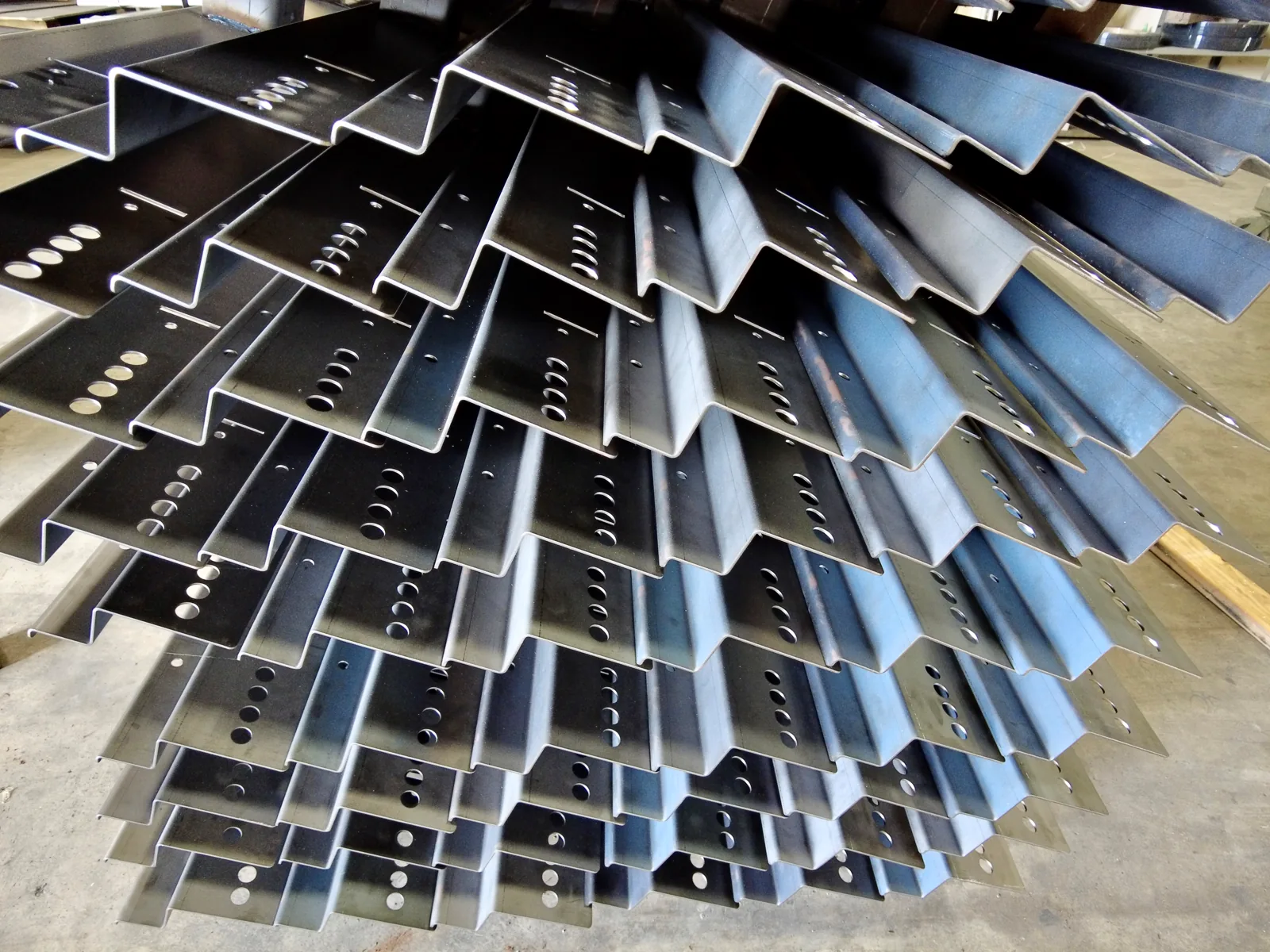
Our press brake forming process transforms laser-cut sheets into complex, functional shapes, integrating features like channels, flanges, and custom fittings to meet your specific assembly requirements.
4. Quality Control & Final Assembly
Inspection should follow the released requirements and the state in which each feature is controlled. Useful checkpoints can include material and revision verification, first-piece inspection, bend-angle and formed-dimension checks, fit checks, and final documentation when specified. The inspection plan and acceptance criteria should be agreed for the project.
The Benefits of Integrated Fabrication
Improved Tolerances:
Using one coordinated route can reduce datum translation and make fit relationships easier to review, but it does not automatically create tighter tolerances. Specify the functional finished-part dimensions and allow the fabricator to propose practical process tolerances where appropriate.
Faster Turnaround Times:
Fewer supplier handoffs can simplify scheduling and revision control. Actual lead time still depends on material availability, programming, tooling, capacity, inspection, finishing, quantity, and approval timing.
Enhanced Overall Quality:
Early manufacturing review can identify inaccessible bends, undersized reliefs, conflicting tolerances, handling constraints, or finish-sensitive features before release. Durability and function remain design requirements that should be defined by the customer or responsible engineer.
Cost Efficiency:
Nesting, common material planning, practical tolerances, stable revisions, and a workable bend sequence can reduce avoidable material use and rework. Cost impact is part-specific and should be evaluated from the complete quote package.
Bringing Your Vision to Life
The strongest integrated-fabrication package defines the finished function while leaving room to review the cutting and forming route. Send the current drawing or CAD model, material, quantity, finish, controlled dimensions, inspection needs, and required date for a project-specific manufacturing review.
Ready to Experience Seamless Production?
Contact Ahner with the released part information to review whether combined laser cutting and press-brake forming fits the geometry, quantity, tolerance, and delivery requirements.
Call: 419-626-6641
Visit: www.Ahner-Industrial.com
Let’s build something exceptional together.