Fabrication article
Precision Fabrication for Global Industries: Ahner Industrial’s Expertise in Custom Tank Solutions
See how Ahner Industrial approaches custom tank fabrication for demanding industrial applications, materials, geometry, and quality requirements.
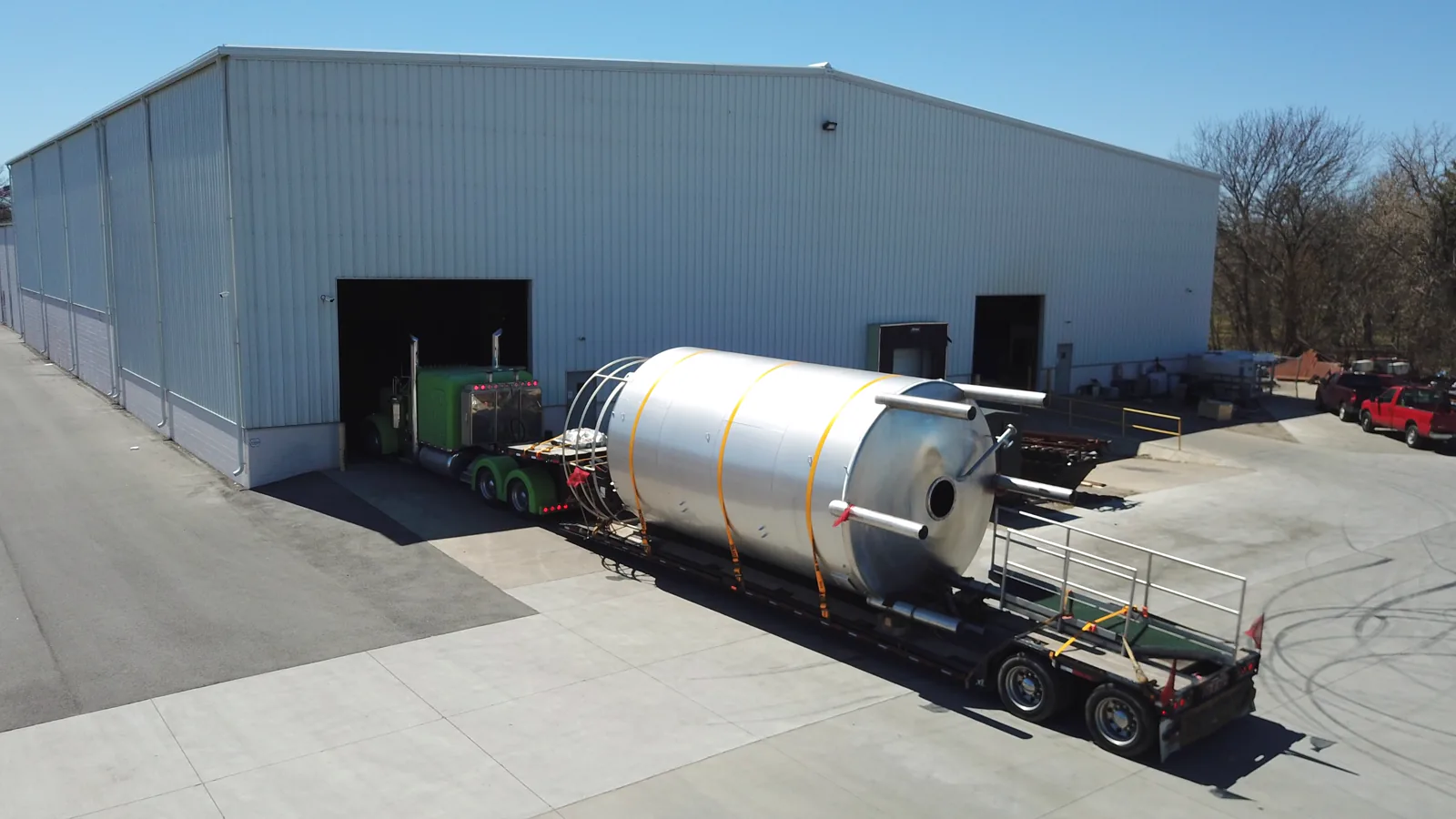
Precision Fabrication for High-Performance Tanks and Vessels
Ahner Industrial fabricates tanks and vessels from customer- or engineer-released designs. The manufacturing review covers material, geometry, forming, weld details, attachments, surface condition, inspection, testing, documentation, handling, shipping, and installation scope. Design code, pressure rating, sanitary classification, fluid compatibility, venting, regulatory compliance, and fitness for service remain with the responsible designer and owner unless explicitly assigned in the contract.
The Critical Importance of Proper Liquid Storage
In industries handling liquids—whether it’s high-proof alcohol, vinegar, or industrial fluids—the right storage solution is vital. Precision fabrication and thoughtful material selection ensure that storage tanks deliver:
Product-contact requirements: the responsible designer should specify material grade, surface condition, weld profile, cleanability, allowable contamination, passivation or treatment, inspection, and acceptance criteria for the actual product and process.
Hygienic Materials: Use of non-porous, food-grade materials such as 304 stainless steel prevents contamination, spoilage, and undesirable chemical reactions.
Consistency: Maintaining purity is key to reliable performance in food, beverage, and chemical processes.
Design and regulatory requirements: identify the governing code, jurisdiction, fluid, temperature, pressure or vacuum, venting, loads, hazard controls, and required third-party review. FDA, USDA, OSHA, and other requirements do not apply automatically from a fabrication description.
Standards Adherence: Tanks are designed to meet FDA, USDA, and OSHA standards for both hazardous and consumable liquids.
Risk Mitigation: Integrated design features—like venting systems and pressure-rated welds—minimize the risk of leaks and vapor buildup.
Corrosion review: material and coating selection should account for the actual fluid concentration, contaminants, temperature, cleaning chemistry, exposure duration, galvanic couples, surface condition, and design life.
Material Expertise: Expert selection and treatment of materials ensure tanks can withstand harsh environments, including acidic or aggressive fluids.
Longevity: Advanced coatings, passivation, and meticulous surface preparation extend the lifespan of every tank.
Operation and maintenance: the responsible design should define access, drainability, cleanability, manways, probes, fittings, supports, lifting, and maintenance clearances.
Ease of Maintenance: Features such as integrated manways, probes, and access points simplify cleaning, inspections, and routine maintenance.
Custom Fit: Tailored flanges, valves, and fittings optimize workflow and align with specific process requirements.
Containment and testing: the released package should define joint details, inspection, leak or pressure test method, test medium, pressure, duration, acceptance criteria, documentation, and responsibility for system-level containment.
Leak-Tight Construction: Robust, leak-tight welds and comprehensive testing prevent spills, protecting both your product and the environment.
Ahner's fabrication role is to build and document the agreed scope from released project requirements. Material selection, operating limits, hazard controls, cleaning strategy, regulatory applicability, and system performance must be established by the responsible engineering and owner teams.
Examples from Released Project Scopes
Case Study 1: Alcohol Storage Tanks for a Global Process Technology Leader
Client: A multinational supplier of machinery and systems for the food, biotechnology, chemical, and environmental technology sectors.
Scope: Fabricate three 304 stainless steel tanks designed for demanding fermentation and distillation processes.
Ahner’s Role:
Fabrication: Constructed tanks to precise specifications (144” diameter x 20’ long, 3/16” thick, with dished heads).
Welding: used TIG welding for the released stainless-steel joint details. Sanitary classification, fluid compatibility, weld profile, cleanup, inspection, and acceptance requirements are defined by the project documents.
Features: incorporated the released manway, flange, probe-port, and interior-finish requirements. Regulatory compliance remains a project-level determination by the responsible parties.
Testing: performed the inspection identified for the project. The applicable method, weld coverage, procedure, acceptance criteria, records, and any leak or pressure test should be confirmed from the released requirements.
Fabricated and delivered the three tanks to the released project scope. Any hygiene, durability, or regulatory acceptance belongs to the documented project requirements and responsible approval parties.
Case Study 2: Vinegar Holding Tanks for a Chemical & Food Industry Innovator
Client: The same global process technology leader requiring tanks capable of withstanding corrosive acetic acid.
Scope: Fabricate vinegar storage tanks designed to endure acidic environments and thermal cycling.
Fabrication: Constructed tanks from 7-gauge (≈3/16” thick) 304 stainless steel, featuring a 144” diameter x 20’ long design with top and bottom dished heads.
Welding: used MIG welding with the post-weld finishing identified for the released joint and surface requirements; corrosion and cleanability acceptance depend on the project specification and service environment.
Features: Integrated passivated exteriors, custom flanges, and effective venting systems per client specifications.
Testing: performed the project-specified inspection and testing. Method, pressure or test medium, duration, coverage, acceptance criteria, and documentation are project-specific.
Fabricated the vinegar-tank scope from the specified stainless material and incorporated the released heads, flanges, venting, surface treatment, inspection, and testing requirements. Service life and maintenance cost depend on design and operating conditions.
Case Study 3: Industrial Fluid Filtration Tank for a Metalworking Solutions Provider
Client: A manufacturer specializing in high-efficiency fluid filtration systems for metalworking and industrial applications.
Scope: Fabricate a large, open-top rectangular tank optimized for fluid containment and filtration processes.
Fabrication: Constructed a custom tank measuring 26’ long x 5’ tall x 8’ wide using 3/16” thick A36 carbon steel plates.
Welding: used MIG welding for the released carbon-steel joint details. Watertightness or leak acceptance depends on the specified inspection and test method and its documented results.
Integration: incorporated the released flanges, fittings, couplings, and channel base for downstream connection and installation.
Surface Preparation: Utilized SSPC-SP3 power tool cleaning and applied a corrosion-resistant paint to enhance durability.
Testing: performed the project-specified inspection. Method, weld coverage, procedure, acceptance criteria, records, and any leak test are defined by the released project requirements.
Fabricated the open-top tank and integrated components to the released material, geometry, joining, surface-preparation, coating, inspection, and test requirements. Field integration and fitness for service remain project-level responsibilities.
Why Clients Trust Ahner Industrial
Project-specific inspection: Inspection and nondestructive-testing requirements are reviewed for each project. When dye penetrant testing or another method is required, the drawing or specification should identify the welds, acceptance criteria, documentation, and leak-test requirements.
Material scope: stainless and carbon-steel work is reviewed against the exact grade, form, thickness, traceability, service, forming, joining, and finish requirements.
Welding process review: TIG, MIG, robotic, or another process is selected from the released material, joint, access, procedure, qualification, sequence, distortion, inspection, and acceptance requirements.
Defined responsibility: the accepted scope should identify design authority, fabrication, inspection, testing, documentation, shipping, field work, and final acceptance responsibilities.
Your Blueprints, Our Craftsmanship
Ahner fabricates stainless- and carbon-steel tank components and assemblies when the released design, material, joint details, inspection plan, testing requirements, finish, handling, and delivery scope fit the shop's reviewed capabilities. Code compliance and fitness for service are project-specific engineering determinations, not blanket fabrication claims.
Ready to Discuss Your Project?
Call: 419-626-6641
Visit: www.Ahner-Industrial.com
Ahner Industrial | Sandusky, Ohio www.Ahner-Industrial.com | 419-626-6641
Send the released tank or vessel package, including design responsibility, material specification, weld details, operating and test conditions, inspection and acceptance criteria, surface requirements, documentation, shipping, and installation scope, for manufacturing review.